
Picture this: It’s 6:30 AM. You stumble into the kitchen, still half-asleep, and reach for your favorite bag of specialty coffee beans. The aroma as you open the bag is intoxicating—notes of dark chocolate, caramel, maybe a hint of berry. You brew it carefully, just like you always do. But when you take that first sip? It’s flat. Bitter. Disappointing.
The beans are fresh. The water temperature is right. Your brewer is solid. So what went wrong?
The real problem is hiding in plain sight: your grind size. For years, I chased better coffee by buying more expensive beans and fancier brewers. But the single biggest upgrade I ever made to my morning routine wasn’t a new espresso machine or a pour-over kettle. It was finally investing in a proper coffee bean grinder.
Here’s the truth that most home brewers discover the hard way: you can pour the world’s best beans through a mediocre coffee bean grinder and get mediocre coffee. But put decent beans through a quality coffee bean grinder? Magic happens. Let’s talk about why grinding matters more than you think—and how to choose the right coffee bean grinder for your home, office, or small café setup.
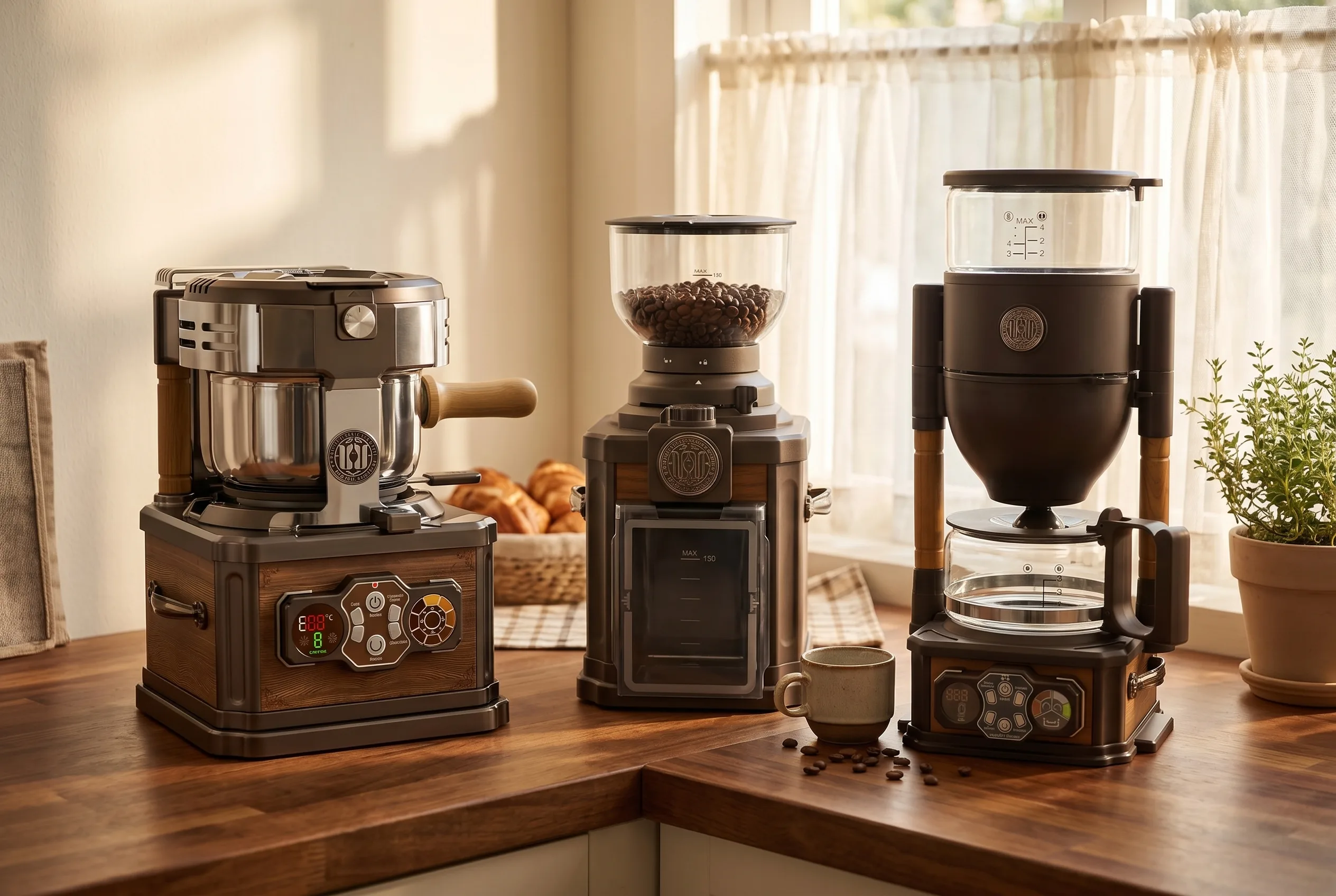
Why Coffee Often Tastes Worse Than Expected
If you’ve ever wondered why your home coffee never quite tastes like it does at your favorite café, you’re not alone. According to the Specialty Coffee Association (SCA), grind size is one of the most underestimated variables in home coffee preparation—yet it’s the one that most influences the final cup. A poor coffee bean grinder is often the hidden culprit.
Here’s what typically goes wrong:
Inconsistent Grind Size
When coffee particles are different sizes, they extract at different rates. The fine particles over-extract (turning bitter), while the coarse ones under-extract (turning sour). The result? A muddy, unbalanced cup that hides all the beautiful flavors your beans have to offer. Only a consistent coffee bean grinder can solve this.
Stale Pre-Ground Coffee
Coffee begins losing its aromatic compounds within *minutes* of being ground. That bag of pre-ground coffee you bought last week? It’s already lost much of its vibrancy. Whole beans, on the other hand, stay fresh for weeks when stored properly—but only if you grind them fresh with your own coffee bean grinder.
Wrong Grind Setting for Your Brew Method
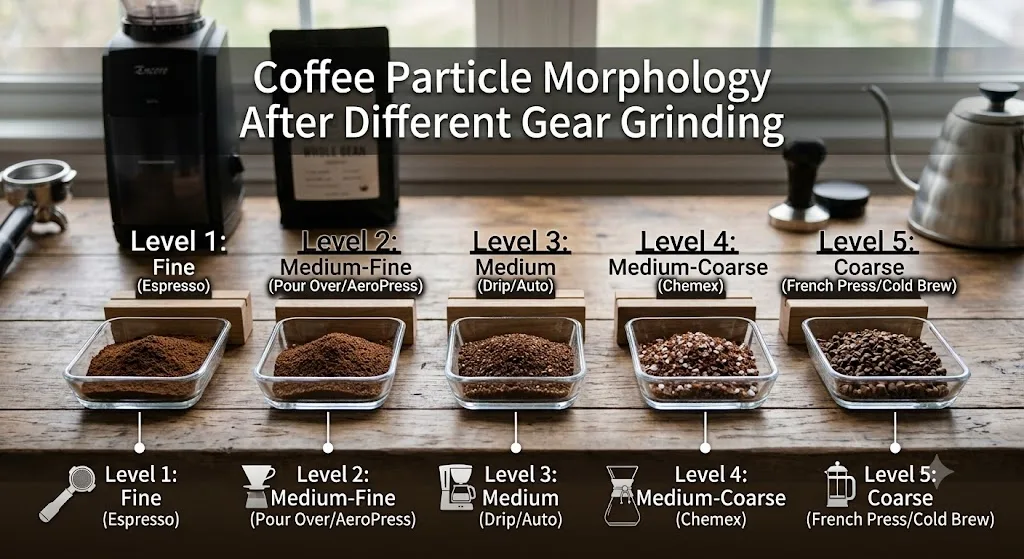
Espresso needs a fine grind. French press needs coarse. Pour-over sits somewhere in the middle. Using the wrong setting is like trying to drive a car in the wrong gear—it technically works, but the experience is terrible. A versatile coffee bean grinder with multiple settings eliminates that guesswork.
Blade Grinder Limitations
Cheap blade grinders chop beans randomly, producing everything from powder to chunks in the same batch. As James Hoffmann—world-renowned coffee expert and author of The World Atlas of Coffee—emphasizes, a burr coffee bean grinder is essential for achieving a consistent grind, which is crucial for even extraction.
The SCA cupping standard requires a grind where about 70–75% of particles pass through a specific sieve size—a level of consistency that blade grinders simply cannot achieve. Barista Hustle further explains that grind size from any grinder isn’t uniform, but rather a distribution of different sized particles, making precision equipment critical. That’s why choosing the right **coffee bean grinder** is non‑negotiable for serious home brewers.
Burr Grinder vs Blade Grinder: The Showdown
Let’s settle this once and for all. Here’s how these two types of coffee bean grinder options compare:
| Feature | Burr Grinder | Blade Grinder |
| Flavor | Clean, balanced, nuanced | Muddy, bitter, unpredictable |
| Consistency | Uniform particle size | Random mix of powder and chunks |
| Heat Generation | Low (slow speed preserves flavors) | High (friction damages oils) |
| Espresso Suitability | Excellent | Almost unusable |
| Cleaning | Moderate (disassembly required) | Easy (but oils build up) |
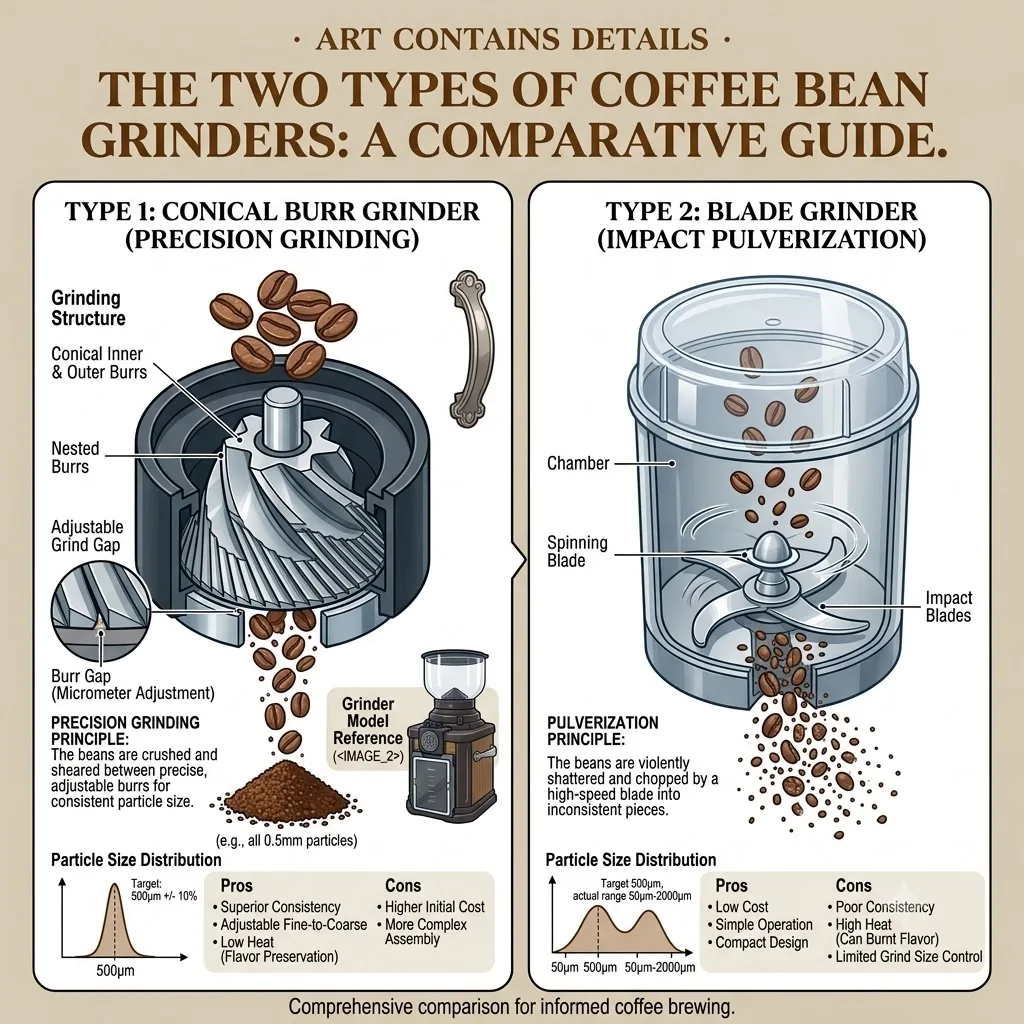
Blade grinders are basically blenders for your beans. They smash and chop randomly, producing an unpredictable mix of fine dust and large chunks. Burr coffee bean grinder systems, by contrast, use two abrasive surfaces to crush beans to a uniform size, giving you the exact control you need.
Testing This Coffee Bean Grinder in Daily Brewing
After weeks of daily use across multiple brewing methods, here’s my honest take on what it’s like to live with a quality electric coffee bean grinder.
First Impression
The first thing you notice is the design. There’s a retro wooden aesthetic that feels inspired by historic Western architecture. It doesn’t look out of place on a kitchen counter; it looks like it belongs there.
Grinding Performance
The high-performance stainless steel conical burr system delivers consistent results across all 16 grind settings.
Noise Test
At below 60dB, this is remarkably quiet for an electric coffee bean grinder.